
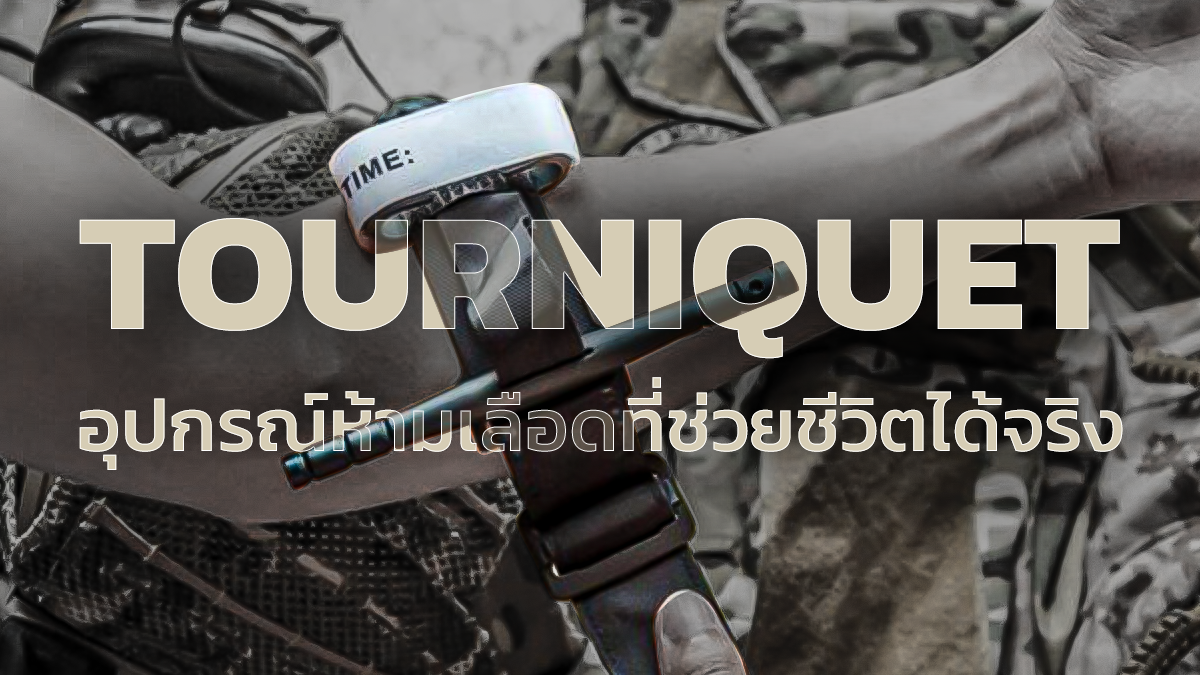
The Importance of Tourniquets
In military combat scenarios, unexpected events can strike at any moment. Whether caught in an ambush or stepping on a landmine, injuries to arms or legs that are not promptly treated to stop bleeding can quickly become life-threatening. Every second counts on the battlefield.
A military tourniquet is a specialized emergency device designed to control and stop severe hemorrhage during critical moments. It has saved countless soldiers' lives during ambushes and explosive incidents. But what is the history of the tourniquet? Which types of wounds should it be used on? How can it be applied safely—and why can improper use be dangerous to the victim?
Tourniquets hold critical medical importance and are used in emergency medical services (EMS) systems worldwide. Pronounced "tour-ni-ket", it is a bleeding control device that works by compressing or constricting blood vessels, typically on the arms or legs, to stop or significantly slow down severe blood flow. Major arterial bleeding carries high pressure, causing victims to lose blood rapidly, which carries a high mortality rate if bleeding is not controlled immediately.

History of Military Tourniquets: Past to Present
Military tourniquets have a long history dating back to ancient Greek and Roman civilizations, where warriors and field medics used cloth or leather straps wrapped around limbs to stop bleeding.
The design evolved significantly in the 17th century when French surgeon Etienne J. Morel developed a twist-screw tourniquet that allowed precise control over compression pressure. This version became widely used in surgical procedures, though it remained limited in application and was largely restricted to military and armed forces use.
Through the 19th and 20th centuries, military tourniquets underwent continuous refinement especially during the World Wars, when tourniquets became standard military issue across all armed forces. Newer iterations prioritized speed, structural strength, safety, and ease of use. A prime example is the Combat Application Tourniquet (CAT), extensively deployed on the battlefield by the U.S. Military.
The Royal Thai Army began adopting tourniquets around 1973 (B.E. 2516). Tourniquets of that era used rubber tubing adapted during the Khao Kho campaign, modified from surgical tubing used by field surgeons. While inexpensive, they had major drawbacks: they caused local tissue trauma, were difficult to store, could not be applied single-handedly, were cumbersome to carry, and degraded quickly.

What Types of Wounds Are Suitable for a Tourniquet?
Tourniquets are designed strictly for use on limbs (arms and legs), as these tubular structures house major arteries running down the extremities, allowing effective compression. Suitable wounds include:
- Deep Incisions Involving Major Arteries: Caused by sharp objects, knives, or machinery blades, characterized by spurting, high-volume blood flow that does not stop with direct pressure.
- Gunshot Wounds, Explosions, or Traumatic Amputations: Traumatic tears, severe limb lacerations, or severed limbs (arms/legs) with continuous, massive hemorrhage caused by shrapnel, bullet penetration, or landmines require immediate tourniquet application on the battlefield.
- Open Fractures with Massive Hemorrhage: Exposed tissue and bone protruding through the skin accompanied by ruptured blood vessels—apply a tourniquet proximal to (above) the injury site.
Wounds NOT suitable for tourniquets: Deep wounds to the torso, neck, chest, or head, as well as internal bleeding, cannot be treated with a tourniquet. Attempting to use one in these areas can be life-threatening.
Proper Step-by-Step Tourniquet Application
- Thread the band around the injured limb, positioning it securely 5–10 cm (2–4 inches) above the wound site (proximal to the heart). Pull the strap tight.
- Turn the windlass rod located above the band. Each turn tightens the constriction around the blood vessels above the wound.
- Turn until blood flow stops completely. Once applied correctly, blood can no longer pass through the constricted point, effectively controlling severe blood loss.
(Reference: How Does A Tourniquet Work?)
How Long Can a Tourniquet Be Kept On?
The primary goal of a military tourniquet is to prevent fatal blood loss from major arterial wounds. However, keeping a tourniquet applied for too long can harm the casualty.
While the injured person must reach definitive medical care as quickly as possible, a tourniquet should not remain applied for longer than 6 hours. Studies show that if the patient receives definitive medical treatment within 2 hours, the risk of permanent tissue or organ damage below the application site remains low. Beyond 6 hours, severe tissue damage becomes highly likely. Crucially, never remove or loosen a tourniquet yourself before the casualty reaches qualified medical personnel.

Understanding Tourniquet Color Coding
Tourniquets come in different colors tailored for specific operational needs. Choosing the right color ensures optimal performance:
- Black: Standard issue for military operations to provide camouflage and prevent light reflections in natural environments, minimizing visibility to enemy forces at a distance.
- Orange: Preferred by emergency rescue teams (EMS) and search-and-rescue units for high visibility, allowing quick identification during urgent rescue scenarios.
- Blue: Dedicated strictly for training purposes. Blue trainer tourniquets are made of specialized materials that can be washed and reused repeatedly for practice. North American Rescue recommends cleaning blue training tourniquets with plain water or mild soap and air-drying completely before reuse.

Key Precautions & Best Practices for Using a Tourniquet
A tourniquet is a vital life-saving device, but proper safety guidelines must be observed:
- Always place the tourniquet proximal to (above) the wound site for maximum effectiveness.
- If the wound is on the upper thigh, do not place the tourniquet over the pelvic bone.
- Never place a tourniquet over male genitalia.
- If a single tourniquet does not completely stop severe bleeding from a massive wound, apply a second tourniquet proximal to (above) the first one.
- Do not loosen or remove a tourniquet on your own leave removal to doctors or trained medical professionals to avoid sudden shock or re-bleeding.
- During practical training, tourniquets can be left tightened for longer than 2 hours for demonstration, but may cause localized pain; avoid overtightening and never exceed 4–6 hours.
- Apply a tourniquet immediately upon identifying severe limb hemorrhage to maximize survival chances.
- While effective on limbs, avoid placing tourniquets directly over joints; position the band above the joint whenever possible.
- Never apply over joints (such as knees or elbows). Always place it above the joint.
- After application, monitor the tourniquet and recheck the patient’s vital signs periodically to ensure bleeding control and casualty safety.

Where to Buy Military Tourniquets
Tourniquets are essential medical devices engineered to prevent fatal hemorrhagic shock from extremity injuries. From ancient history to modern warfare, tourniquets have evolved into reliable life-saving instruments.
For civilians seeking an emergency tourniquet for trauma kits, Valor Tactical Store offers genuine, field-proven tourniquets imported directly from North American Rescue. Whether for military, medical, or training use, having a certified tourniquet and knowing how to use it properly can save a loved one's life in a critical moment—because emergencies can happen anywhere, anytime.
For government agencies, military units, or organizations seeking military-grade medical equipment and bleeding control gear via B2G procurement, detailed product information is available at the VALOR STRATEGIC website
- Email: admin@valorstrategic.com / sales@valorstrategic.com
- Phone: 02-118-6156 (Business Hours: 09:30 – 17:30)


Read More Articles: