


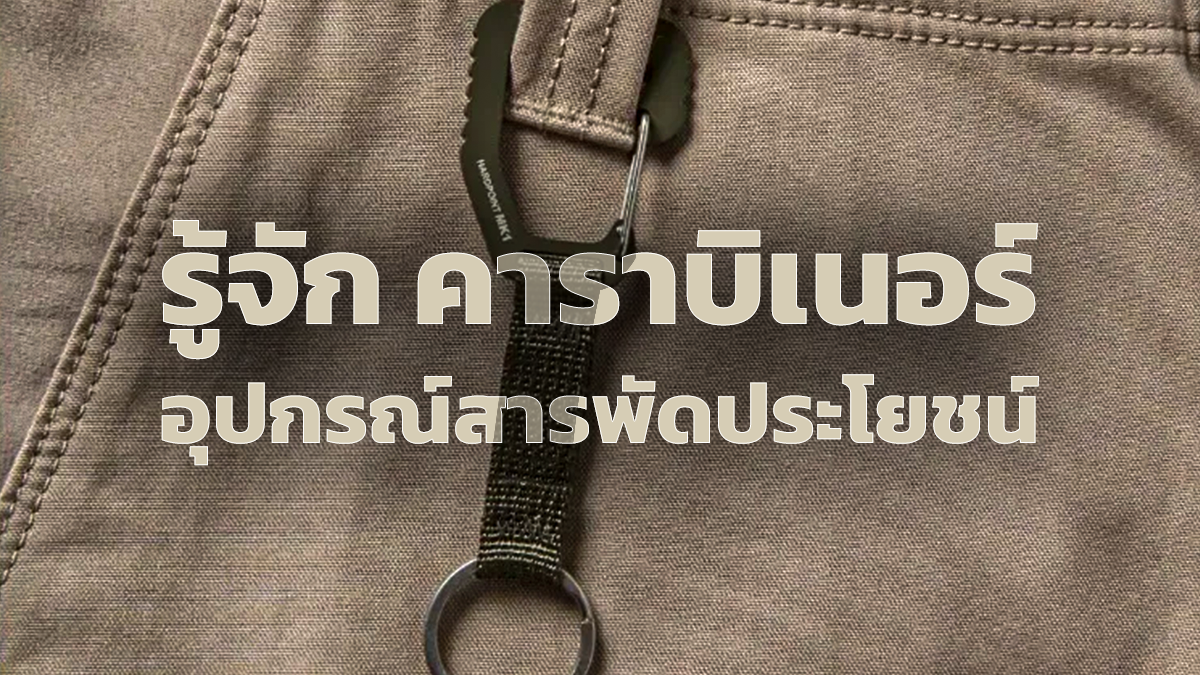
For lovers of outdoor activities—whether rock climbing, hiking, camping, or working at heights there is one indispensable piece of equipment: the Carabiner (often locally called a safety ring). Though small and seemingly simple, it is exceptionally versatile. Some models are literally life-saving, while others cater to general everyday utility. Let’s explore the types, benefits, and how to choose the right carabiner for your needs.
What is a Carabiner?
A carabiner is a metallic safety loop equipped with a spring-loaded gate mechanism. They are typically made from high-strength yet lightweight materials, such as aircraft-grade aluminum or steel. A carabiner consists of two main parts:
- Body: The metallic loop.
- Gate: The opening mechanism, fitted with a locking system designed for ease of use and maximum safety.
The word Carabiner originates from the German term Karabinerhaken (meaning "carbine hook"). Historically, cavalry soldiers used them to connect their carbine rifles to their shoulder straps before they evolved into the essential gear we rely on today.

Beyond Safety: The Versatile Benefits of Carabiners
While many view carabiners purely as safety gear, their applications span from daily chores to heavy industry:
- Rescue Operations: Functions primarily as a life-saving tool in rock climbing, rappelling systems, and mechanical haulage/pulley setups.
- Industrial & High-Altitude Work: Acts as essential fall-protection equipment for construction workers and engineers.
- Camping & Hiking: Serves as key outdoor gear for hanging lanterns, securing hammocks, or keeping frequently used items readily accessible.
- Everyday Carry (EDC): Compact carabiners make great keychains, wallet clips, pet leash connectors, or gear tie-downs inside vehicles due to their high strength-to-weight ratio.

Common Carabiner Shapes
The market offers various shapes tailored to specific applications, with four primary forms:
| Shape | Features & Best Uses |
| D-Shape | The most popular design. Offers maximum strength by directing loads toward the stronger, un-gated spine. Ideal for general climbing and hiking. |
| Oval Shape | Symmetrical design on both top and bottom. Allows smooth shifting of gear; highly flexible for use with pulleys or rigging systems. |
| Pear Shape (HMS) | Features a wider top end specifically designed to accommodate belay knots (Munter hitch) and rappelling devices smoothly. A favorite among climbers. |
| Asymmetrical D | A modified D-shape with a wider top opening to allow a larger gate clearance, making it easier to clip ropes and gear while retaining strong load performance. |

Types of Carabiners by Application
Carabiners are categorized into four distinct functional types:
- Locking Carabiners: Designed for maximum security. The locking gate prevents accidental opening, making it crucial for high-risk situations like rappelling, lead climbing anchor setups, and rescue work. Available in screw-lock and auto-locking mechanisms.
- Non-Locking Carabiners: Lightweight and fast to open/close. Ideal for low-risk tasks where speed and agility take priority.
- Specialty Carabiners: Engineered for specific technical uses:Pulley Carabiners: Integrates a built-in shear pulley wheel within the frame to minimize friction when hauling heavy loads.Directional / Captive Eye Carabiners: Features a pin or internal bar that holds ropes or webbing in position to prevent cross-loading.Tactical / Military Carabiners: Crafted with non-reflective matte finishes and noise-dampening qualities for tactical and covert operations.
- Micro Carabiners: Small, key-chain-style loops commonly used in daily life. Made from lightweight aluminum or durable hard plastic, they are meant strictly for gear organization (hanging water cups, flashlights, or keys)—never for human weight support.

How to Choose the Right Carabiner
Because carabiners range from life-safety gear to casual utility tools, choosing the right one depends heavily on your intended use:
- High-Altitude & Safety Work: Opt for certified Life Safety (Locking) carabiners that meet international safety standards (e.g., CE / UIAA).
- Camping & Backpacking: Prioritize lightweight, quick-handling designs—such as wire-gate non-locking models for flysheets, or micro carabiners for lantern hanging.
- Everyday Utility: Choose compact, convenient micro carabiners or keychain loops for organizing bags, eyeglass cases, and EDC items.
- Tactical Operations: Select specialized military-grade carabiners with low-visibility matte coatings suited for tactical tasks.

Quality You Can Rely On
Whether for rugged outdoor adventures or lightweight daily convenience, carabiners offer incredible versatility without adding bulk to your loadout. If you are looking for 100% genuine, reliable quality rather than risking low-grade imitations, let VALOR Tactical Store assist you.
We offer a broad selection—from camping and hiking carabiners to specialized tactical gear and micro carabiners for your travel logistics. Visit our VALOR Tactical Store (Chokchai 4 branch), or explore our online catalog below to order high-quality gear at special discounted prices.
Have questions or topics you'd like us to cover next? Leave a comment under this article!
Read More Articles
- Portable Hiking Water Filter Straws: Compact, easy to carry, and effectively filters out contaminants for safe backcountry hydration.
- How to Measure Shoe Size: Size charts and clear comparisons between US, UK, and EU footwear sizing.
- Bollé Safety Glasses: World-class anti-fog protective eyewear—coming soon to our store!


