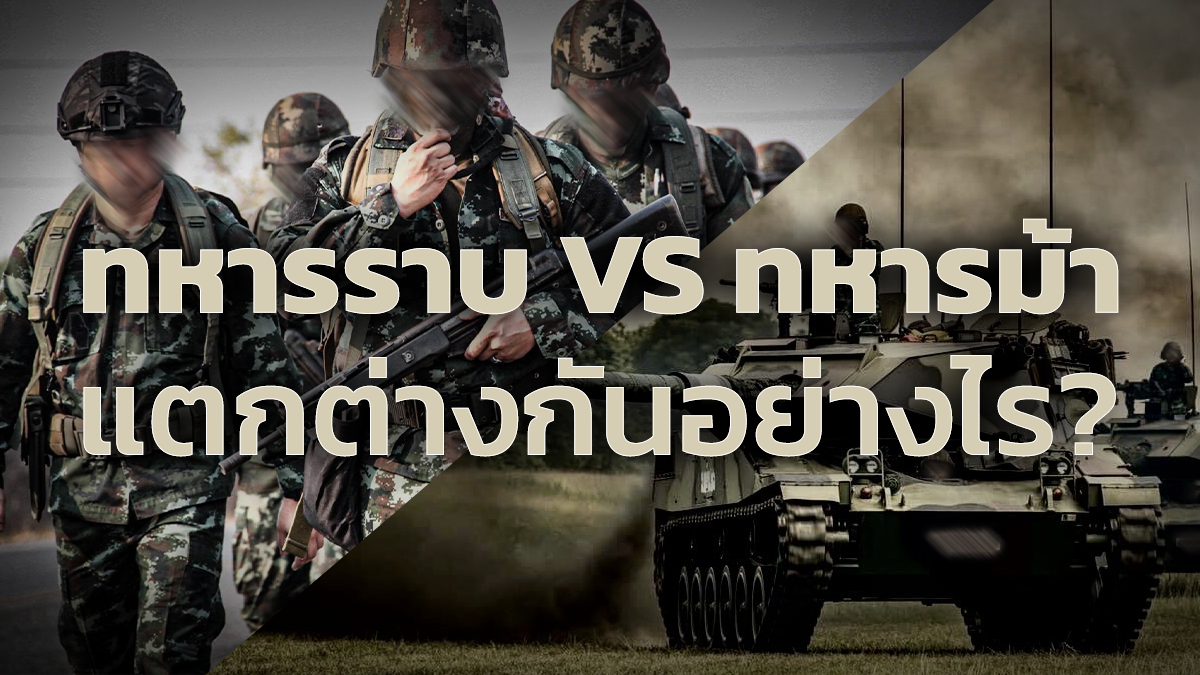
When exploring army branches, each unit plays a distinct role tailored to the military's core responsibilities. Many people frequently hear the terms Infantry and Cavalry, but have you ever wondered how they truly differ and what specific roles they fulfill on the battlefield?
This comprehensive guide breaks down the core differences, combat roles, and overall strategic importance of both branches. Ultimately, both Infantry and Cavalry serve as essential cogs in the military machine, working in tandem to drive mission success.

What Is the Infantry? (The "Queen of the Battle")
Infantry refers to ground-based combat forces. Serving as the primary backbone of the land forces, infantry units are highly versatile across various operational scenarios earning them the title "Queen of the Battle." In Thailand, King Chulalongkorn (Rama V) designated September 24 as Royal Thai Army Infantry Day.
Key Strengths of the Infantry
- High Mobility Across All Terrains: Infantry troops can maneuver through complex, rugged environments such as bamboo forests, mountains, and dense urban zones enabling swift and effective operations where vehicles cannot tread.
- Adaptability: Infantry units seamlessly switch combat postures between offensive attacks and defensive holds based on real-time battlefield conditions.
- Close Combat & Ground Control: Infantry forces specialize in close-quarters combat, neutralizing enemy personnel, and capturing crucial terrain. Controlling strategic high ground and key locations remains indispensable for winning wars.

What Is the Cavalry? (The "Knights of the Battlefield")
Historically, the Cavalry comprised mounted soldiers fighting with swords, lances, or firearms from horseback. In modern warfare, live horses have been largely replaced by high-speed mechanized and armored vehicles. Known as the "Knights of the Battlefield," cavalry units deliver high-impact firepower and operate alongside infantry forces.
5 Main Types of Cavalry Units
- Reconnaissance Cavalry: Tasks include field scouting, battlefield surveillance, early warning, and screening friendly forces.
- Armored/Tank Cavalry: Employs Main Battle Tanks (MBTs) to spearhead shock attacks and crush enemy defenses. However, tanks can become stationary targets without adequate support.
- Armored Personnel Cavalry (Mechanized Infantry): Mitigates tank vulnerabilities by protecting armored units, securing prisoners, and clearing objectives. They perform infantry-like tasks while transported inside armored personnel carriers (APCs).
- Air Cavalry: Utilizes attack and utility helicopters to gain vertical maneuverability, offering high mobility and devastating firepower. Air cavalry supports infantry and ground armored units. (Note: Many traditional air cavalry functions have transitioned to dedicated Army Aviation Centers).
- Horsed (Mounted) Cavalry: Operates with live horses. In modern times, these units no longer perform front-line combat roles but are maintained for ceremonial parades and state occasions.

Infantry vs. Cavalry: 5 Core Differences in Battle
| Comparison Metric | Infantry | Cavalry |
| 1. Mobility & Speed | Slower; primarily foot-based. Ideal for remote, mountainous, or restrictive terrains unreachable by vehicles. | Superior speed and rapid deployment. Built for swift maneuvers, flank attacks, and fast repositions. |
| 2. Firepower & Combat | Lower immediate destruction power; excels at close-quarters combat and long-term engagement continuity. | High destruction power via heavy armor, cannons, and machine guns; designed to shatter enemy lines. |
| 3. Defense & Holding Power | Superior defensive capability. Highly effective at constructing fortified positions and utilizing natural cover. | Vulnerable when stationary. Rely on speed and armor rather than static defense. |
| 4. Cost & Maintenance | Lower operational cost; simpler supply chain relying primarily on manpower and personal gear. | High operational and maintenance costs (fuel, armor repair, ammunition, or equine care/veterinary needs). |
| 5. Battlefield Tactics | Focuses on defensive lines, terrain utilization, and mixed short-to-long-range combat engagements. | Focuses on rapid strike-and-withdraw maneuvers, avoiding static head-on attrition to maintain momentum. |

Do Cavalry Units Still Ride Horses Today?
In the past, cavalry soldiers exclusively rode horses into combat. Modern military technology replaced live horses with armored fighting vehicles, main battle tanks, and tactical aircraft.
However, specialized units—such as the 29th Cavalry Battalion (King's Guard) in Thailand—continue to keep and train horses specifically for royal ceremonies, parades, and historical honor guards.
Strategic Synergies on the Battlefield
Every military unit holds specific responsibilities crucial for securing victory. Infantry provides ground control, adapts to complex terrain, and holds captured positions securely. Meanwhile, Cavalry delivers rapid maneuverability, shock value, and heavy armor support.
When infantry and cavalry forces integrate effectively, their combined strengths cover individual weaknesses, allowing commanders to handle any battlefield threat efficiently.
Premium Tactical Gear for Military & Field Operations
For tactical enthusiasts, service members, and organizations seeking authentic, high-grade military equipment:
Equipping infantry and cavalry personnel with reliable gear is essential for mission safety and operational confidence. We stock world-renowned brands, including 5.11 Tactical outerwear and Salomon Forces footwear equipped with GORE-TEX waterproofing and puncture-resistant soles (protecting against nails, glass, and harsh terrain).
- Check out our detailed guide: Top 3 Salomon Forces Boots for Field Operations.
Bulk & Institutional Procurement
We supply law enforcement agencies, military units, and security organizations with bulk equipment orders, tactical vests, body armor carriers, and training gear.VALOR STRATEGIC
- Website:VALOR STRATEGIC
- Sales & Inquiries: admin@valorstrategic.com | sales@valorstrategic.com
- Phone: +66 2 118 6156 (Mon–Fri, 9:30 AM – 5:30 PM)
Related Articles
- 10 Practical Ways to Wear a Neck Gaiter (Beyond Sun Protection)
- Why 5.11 Tactical Gear Is So Popular in Thailand
- Military Tourniquets: The Life-Saving Emergency Hemostatic Tool

