


For target shooters, tactical professionals, and outdoor enthusiasts, choosing the right safety glasses and lens tints isn't just about fashion or basic sun protection—it directly impacts accuracy, safety, and visual clarity.
World-renowned Oakley SI Prizm™ Shooting Technology was developed to fine-tune specific light wavelengths across 7 color bands. By filtering out distracting light frequencies and intensifying target colors (such as orange, red, and bronze), Prizm™ lenses make targets pop with significantly greater contrast than standard neutral lenses.
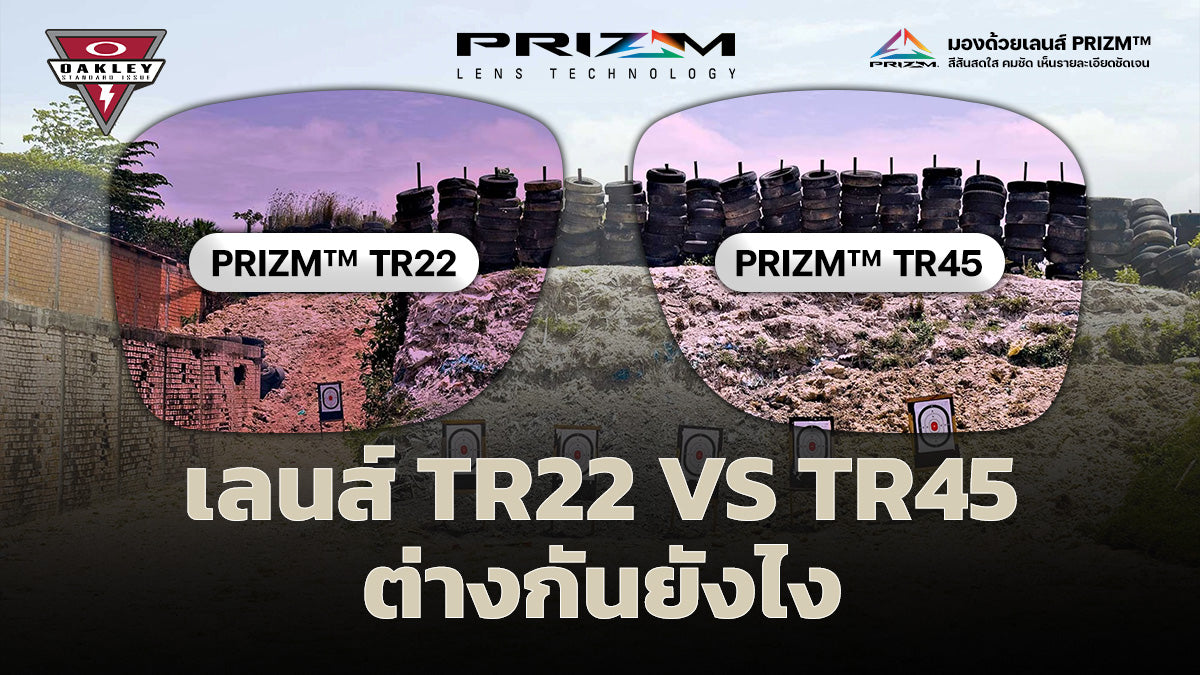
The two primary lenses in the Prizm Shooting lineup are TR22 and TR45. How do they differ in performance and spectral tuning, and which one offers the best value for your setup? Let’s examine the science behind both lenses.

Understanding Oakley SI Prizm™ Shooting Technology
The human eye sees visible light across seven primary color wavelengths. Under harsh ambient glare or low-contrast backgrounds—such as dense trees, dry grass, or grey concrete—separating a target from its surroundings becomes difficult and tiring.
Oakley Prizm™ Shooting technology addresses this challenge through three visual mechanisms:
- Enhanced Target Contrast: Isolates and amplifies orange, red, yellow, steel, and paper targets against natural backgrounds.
- Reduced Eye Fatigue: Cuts out noisy, scattered wavelengths that cause visual haze during prolonged aiming.
- Calibrated Visible Light Transmission (VLT): Regulates the precise percentage of light entering the eye to match specific environment lighting.
How Prizm™ Lenses Work & Full Oakley Prizm™ Lens Lineup

Deep Dive: Prizm Shooting TR22 (Bright Light & Full Sun)
Comparing the spectral transmission curve of the Prizm™ Shooting TR22 lens (pink line) against a standard grey tint lens (grey line):
- 22% VLT Rating: TR22 allows approximately 22% of visible light to pass through. Lower VLT values make this lens ideal for bright, direct outdoor sunlight.
- Blue Light Suppression (470–490 nm): TR22 sharply cuts down light in the blue spectrum. Reducing scattered blue light eliminates haze and harsh glare, helping the eye focus without straining.
- Yellow/Green Dip (580 nm): Light transmission dips in the yellow-green band. This spectrum offers little contrast benefit in bright sun, so dampening it keeps the overall visual field balanced.
- Peak Target Boost (600–700+ nm): Transmission spikes dramatically to 80–90% in the orange-red spectrum. Because this red spectrum is easy on the eyes and aligns with target colors, orange clay targets, paper bullseyes, and red-dot reticles appear dramatically brighter and elevated from the background.
Visual Result: TR22 filters out distracting blue and green light while flooding the eye with high-contrast red-orange wavelengths. It is the gold standard for open-air ranges, bright sunshine, clay shooting, and high-glare environments.

Deep Dive: Prizm Shooting TR45 (Low Light & Indoor Ranges)
Comparing the spectral transmission curve of the Prizm™ Shooting TR45 lens (pink line) against a traditional Persimmon tint lens (grey line):
- 45% VLT Rating: Allowing ~45% light transmission, TR45 lets in over twice as much light as TR22. This higher VLT makes it ideal for indoor shooting, overcast skies, early mornings, or shadowed environments.
- Violet Light Boost (420–440 nm): Unlike standard tints, TR45 lifts transmission in the violet spectrum up to nearly 60%, noticeably brightening the overall scene without feeling washed out.
- Blue Glare Cut (480 nm): Even in low light, TR45 dampens specific blue light spikes that cause retinal strain and dry eyes during extended range sessions.
- Red Target Boost (600–700+ nm): Just like TR22, TR45 features a massive 80–90% transmission peak in the red-orange spectrum. This ensures steel and paper targets stand out sharply even in dark or shadowed shooting bays.
Visual Result: TR45 brightens low-light environments by letting in more total light and boosting short-wavelength violet, while maintaining high contrast on red and orange targets.
Prizm TR22 vs. Prizm TR45: Which Lens Should You Choose?
Selecting between TR22 and TR45 depends primarily on your shooting venue and the ambient lighting conditions you encounter most often:
Choose Prizm Shooting TR22 if you are:
- An Outdoor Range Shooter: Regularly training or competing under intense mid-day sun.
- A Clay Target Competitor: Tracking bright targets across open skies, high glare, and reflective backgrounds.
- Sensitive to Bright Light: Looking to eliminate harsh solar glare while keeping reticles and targets razor-sharp.
Choose Prizm Shooting TR45 if you are:
- An Indoor Range Shooter: Practicing under roofed shooting bays, overhead fluorescent lights, or mixed shadows.
- Shooting in Low Light: Operating in early mornings, late twilights, overcast days, or dense forest cover.
- A Tactical Operator: Needing higher overall image brightness to identify threats in shaded corners without sacrificing instant target acquisition.

Comparison Table: Prizm TR22 vs. TR45
| Feature / Spec | Prizm™ Shooting TR22 | Prizm™ Shooting TR45 |
| VLT Rating (Light Transmission) | 22% (Darker, higher glare protection) | 45% (Brighter, higher light entry) |
| Ideal Lighting Conditions | Full sun, bright daylight, high glare | Low light, overcast, dawn/dusk, indoor ranges |
| Visual Characteristics | Maximizes glare reduction; pops orange/red targets against bright sky/sand | Amplifies scene brightness while maintaining red/orange target contrast |
| Best Applications | Outdoor ranges, IPSC/IDPA in full sun, Skeet/Trap shooting | Indoor ranges, tactical close-quarters, forested/shaded terrain |

Summary: Finding Your Ideal Oakley SI Setup
Both the Oakley SI Prizm TR22 and TR45 represent high-performance optical engineering designed specifically for target speed and precision.
- TR22 is your go-to lens for beating bright sunlight and eliminating blue glare outdoors.
- TR45 is the top choice for indoors, shade, low-light conditions, and transitional environments.
In addition to TR22 and TR45, the Oakley SI (Standard Issue) tactical lineup features additional lens technologies, including HDO® (High Definition Optics), Polarized options, and Iridium® coatings for specialized visual environments.
Explore authentic imported Oakley SI tactical eyewear at VALOR Tactical Store branches (Chokchai 4 & Lopburi) or browse our collection online below.
Have questions about shooting lenses or want us to cover another tactical topic? Leave a comment below!
Related Articles
- What Is Oakley SI? Differences Between Oakley SI and Standard Oakley Lines
- Prizm vs. Polarized Lenses: Differences & When to Use Each
- How to Properly Clean & Maintain Safety Glasses to Maximize Lifespan


