


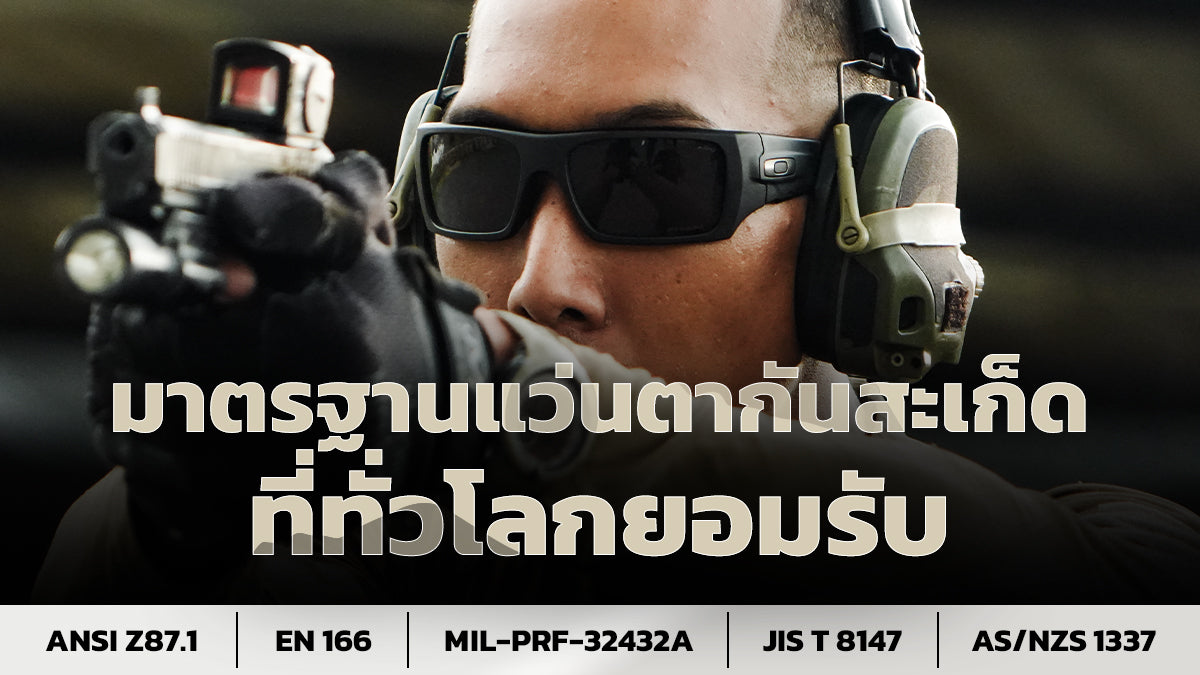
Are safety standards for ballistic eyewear real, or are they just marketing claims? This article takes a deep dive into globally recognized safety standards including EN 166, ANSI Z87.1, and the military-grade MIL-PRF-32432A while introducing safety eyewear technologies so you can verify authentic products and choose eye protection with total confidence.


Global Ballistic Eyewear Standards: What to Check Before You Buy
When discussing safety standards for ballistic glasses, many users think of the numbers and code letters stamped on the frame or printed on the box. These markings certify that the eyewear can withstand high-velocity impacts from metal fragments, flying debris, or shrapnel.
You might wonder: How many ballistic standards are there? Why do different glasses carry different markings? What do ANSI Z87+, MIL-PRF-32432A, or EN 166 actually mean, and how do they differ? Let's break down these standards so you can make an informed choice for your specific needs.

Every Certified Ballistic Eyewear Code Requires Rigorous Testing
Every model of ballistic safety glasses offered for sale must undergo strict laboratory testing to earn international certification. Safety regulatory bodies around the world establish clear performance criteria to verify that these protective devices genuinely safeguard your eyes in high-risk environments.
Using fashion sunglasses or standard daily glasses in place of certified ballistic eyewear during high-impact situations—such as exposure to flying rock chips or metal fragments—can lead to life-threatening injuries. Non-rated glasses are simply not built to handle tactical or high-impact stress.
By contrast, certified ballistic eyewear is manufactured using specialized, high-tenacity materials engineered to absorb extreme impact forces without shattering into dangerous shards. Whether facing gravel, ricochets, or projectile fragments, rated protective eyewear offers life-saving protection.
Globally Recognized Ballistic & Safety Eyewear Standards
Safety standards vary by region, with different authorized organizations responsible for testing and certifying protective equipment:
ANSI Z87.1 Region Authority United States (ANSI)
The most widely accepted global safety standard. Regulates high-impact (High Impact / Z87+) performance, splinter resistance, hazardous radiation shielding, and optical clarity. Used across safety goggles, face shields, welding helmets, and tactical eyewear.

EN 166 Region / Authority European Union (EU)
The core European safety standard for personal eye protection. Covers mechanical strength, chemical resistance, radiation protection, and optical clarity for safety glasses, goggles, and face shields. Markings are laser-etched or stamped on the lenses and frames.
U.S. Military (MCEP) Region / Authority U.S. Military (MCEP)
Military Combat Eye Protection (MCEP) standard representing ballistic performance far exceeding ANSI Z87.1. Tested against high-velocity projectiles and fragment simulators at 700–725 ft/s (4 to 7 times higher energy than standard industrial tests) and military chemical exposure. Ideal for military, law enforcement, shooting sports, and Airsoft.
AS/NZS 1337 Region / Authority Australia & New Zealand
Industrial eye protection standard focusing on impact resistance and UV radiation shielding across Oceania.
JIS T 8147 Region / Authority Japan
Japanese industrial standard prioritizing impact safety, wearer comfort, and lens durability required for industrial imports into Japan.

How to Verify Authentic Ballistic Eyewear Before Buying
To ensure your eye protection is authentic and compliant with safety ratings, check the following key factors:
- Inspect Markings on Lenses & Frames: Genuine ballistic eyewear features permanently stamped or laser-engraved codes (such as Z87+, CE, or EN166) directly on the frame, temples, or lenses.
- Request a Certificate of Conformity: Reputable manufacturers and authorized distributors can provide official test reports from accredited independent laboratories.
- Examine Material Quality: Frame and lens materials must remain flexible and tough under stress without cracking or shattering under severe torsional flex or impact.
- Buy from Authorized Distributors: Always purchase through official regional distributors to guarantee 100% genuine products and reliable warranty support.

Final Thoughts: Choose the Right Protection for Your Risk Level
A safety standard rating isn't just a label—it is proof that your eyewear can stop high-velocity shrapnel, bullet fragments, and explosive debris before reaching your eyes and face.
When selecting tactical or safety eyewear, look beyond promotional buzzwords like "bulletproof" or "impact-resistant." Always confirm the specific standard, its protection tier, and whether it matches your operational or work environment.
For those seeking high-performance tactical glasses, ballistic eyewear, or field-tested safety glasses, Valor Tactical Store is an authorized importer and distributor of leading international brands:
- Bollé Safety: World-renowned safety eyewear featuring advanced anti-fog lens technology.
- OAKLEY SI (Standard Issue): Dedicated tactical eye protection designed specifically for military and law enforcement professionals.
- Edge Eyewear: U.S.-based safety eyewear delivering premium optical clarity and high-impact protection.
Choose the right brand and certified model to ensure your eyes remain fully protected wherever your work or mission takes you.
Related Articles
- What Are Polarized Lenses? Benefits & Why You Need Them Outdoors
- Oakley SI Lenses Guide: Types & How to Choose the Right Pair for Real-World Use
- TR22 vs TR45: Differences & Choosing the Best Oakley Prizm™ Shooting Lens
- How to Measure Shoe Size: Size Charts & US / UK / EU Conversion Guide


