

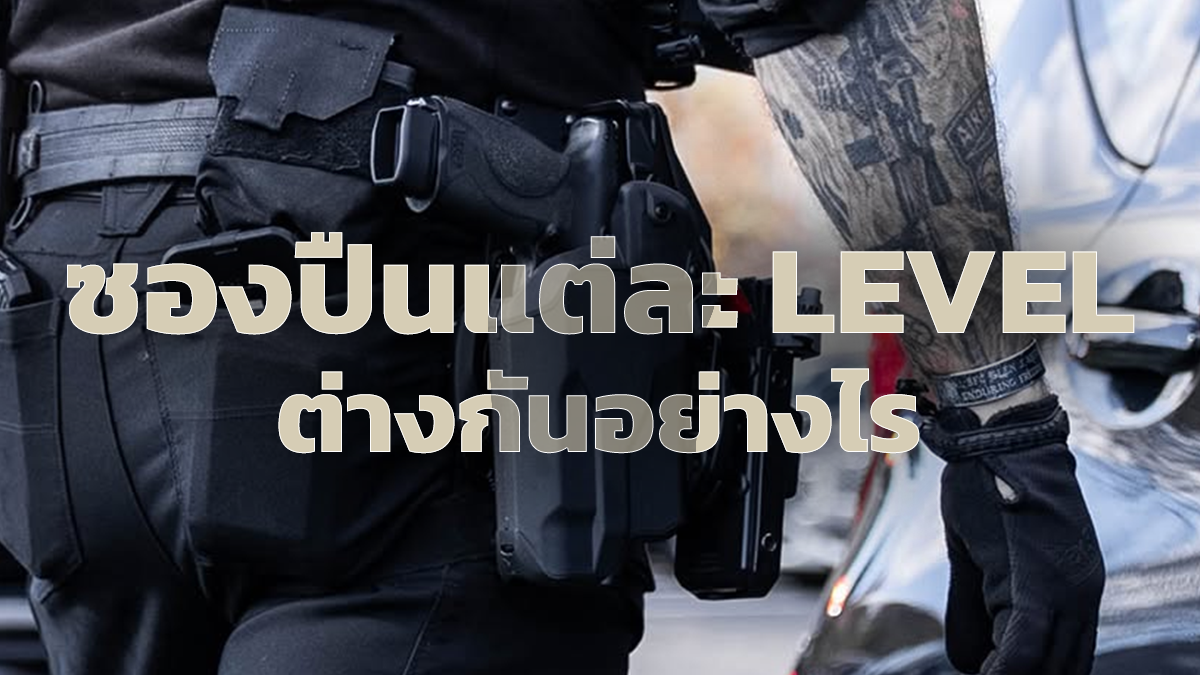
Selecting the right gun holster goes beyond personal aesthetics or raw materials. The most critical factor when choosing a holster is its Retention Level—the standardized rating system that determines how securely a holster retains a firearm and prevents unauthorized draw or disarming attempts.
Whether you are comparing Level 1 vs. Level 2 holsters or looking for duty-grade Level 3 retention systems, understanding how these mechanisms work is essential for safety, operational readiness, and performance.
This guide breaks down holster retention levels 1 through 4, detailing their release mechanisms, practical advantages, and how to choose the right setup for your operational needs.


What Is Holster Retention?
Holster retention refers to the security mechanism that prevents a handgun from falling out during physical movement or being grabbed by an adversary.
As retention levels increase, security against weapon takeaway rises significantly. However, higher retention levels add mechanical steps, requiring dedicated practice to master a smooth and rapid draw.
Holster Retention Levels Breakdown: Level 1 to Level 4
Level 1 Holsters: Maximum Speed & Simplicity
Level 1 holsters rely on basic passive friction between the holster body and the firearm. Commonly constructed from thermoformed Kydex or molded polymer, they feature no active mechanical locks or thumb breaks.
- Primary Mechanism: Passive friction (adjustable via retention screws).
- Ideal Users: Competitive shooters (IDPA/USPSA), concealed carry (IWB) users, and range practice.
- Key Benefits:Fastest Draw Time: Zero mechanical locks to disengage—simply grip and draw vertically.Concealable & Lightweight: Slim profile designed to ride tight against the body.Low Maintenance: Minimal moving parts make cleaning and field maintenance effortless.
- Fastest Draw Time: Zero mechanical locks to disengage—simply grip and draw vertically.
- Concealable & Lightweight: Slim profile designed to ride tight against the body.
- Low Maintenance: Minimal moving parts make cleaning and field maintenance effortless.
Level 2 Holsters: Enhanced Security for Duty & Field Use
Level 2 holsters add an active retention lock on top of passive friction. To draw the sidearm, the user must activate a release mechanism—such as a thumb-break lever, index-finger push button, or rotating hood. A prime example is the G-Code XSR Level 2 Duty Holster.
- Primary Mechanism: Passive friction + 1 active mechanical lock (e.g., thumb release or hood).
- Ideal Users: Plainclothes officers, private security personnel, and open-carry outdoor enthusiasts.
- Key Benefits:Retention During Movement: Prevents the firearm from dislodging during sprinting, tactical maneuvers, or physical exertion.Basic Disarm Protection: Prevents untrained individuals from pulling the gun straight out of the holster.Seamless Draw: With proper muscle memory, disengaging the lock coincides naturally with establishing a master grip.
- Retention During Movement: Prevents the firearm from dislodging during sprinting, tactical maneuvers, or physical exertion.
- Basic Disarm Protection: Prevents untrained individuals from pulling the gun straight out of the holster.
- Seamless Draw: With proper muscle memory, disengaging the lock coincides naturally with establishing a master grip.
Level 3 Holsters: Duty-Grade Security for Law Enforcement & Tactical Units
Level 3 holsters are engineered for high-risk, close-quarters tactical environments where weapon retention is paramount. They combine passive friction with two distinct active locking mechanisms (such as an ejection port lock combined with a rotating back strap/hood).
To draw, the operator must execute a coordinated multi-step release sequence (e.g., depressing an internal lever while pushing forward a protective hood).
- Primary Mechanism: Passive friction + 2 active mechanical locks (e.g., Safariland ALS + SLS system).
- Ideal Users: Uniformed patrol officers, SWAT teams, military personnel, and tactical operators.
- Key Benefits:Maximum Anti-Grab Protection: Extremely difficult for an attacker to disarm the operator during a physical struggle.Rugged Construction: Built to withstand severe impacts, harsh weather, and rigorous field duty.Peace of Mind: Allows operators to focus on suspect control without compromising weapon security.
- Maximum Anti-Grab Protection: Extremely difficult for an attacker to disarm the operator during a physical struggle.
- Rugged Construction: Built to withstand severe impacts, harsh weather, and rigorous field duty.
- Peace of Mind: Allows operators to focus on suspect control without compromising weapon security.
Level 4 Holsters: Maximum Retention for High-Risk Transport
Level 4 represents the highest retention tier available. It builds upon a Level 3 system by adding a fourth security device, such as an extra mechanical cover or secondary guard lock.
- Primary Mechanism: Passive friction + 3 active security locks (requires 3 to 4 distinct manual actions to release).
- Ideal Users: Corrections officers and high-risk inmate transport details.
- Key Considerations:Extreme Security: Near-impossible for unauthorized personnel to draw the sidearm.Slower Draw Speed: Due to its complex release sequence, Level 4 is rarely used in standard patrol or tactical scenarios and is offered by very few manufacturers today.
- Extreme Security: Near-impossible for unauthorized personnel to draw the sidearm.
- Slower Draw Speed: Due to its complex release sequence, Level 4 is rarely used in standard patrol or tactical scenarios and is offered by very few manufacturers today.

Retention Level Comparison Table
| Level | Locking Mechanism | Key Advantage | Best Suited For |
| Level 1 | Passive Friction | Lightning-fast draw speed | Competition, Concealed Carry (IWB), Range |
| Level 2 | Friction + 1 Active Mechanical Lock | Balanced speed and drop security | Plainclothes Police, Security, Open Carry |
| Level 3 | Friction + 2 Active Mechanical Locks | High anti-takeaway protection | Uniformed Patrol, SWAT, Military Ops |
| Level 4 | Level 3 + Extra Guard/Cover | Maximum security in close custody | Corrections Officers, High-Risk Transport |
How to Choose the Right Holster for Your Mission
There is no single "best" holster retention level—only the right holster for your operational context:
- For Concealed Carry & Competition: Choose Level 1 for speed, low weight, and maximum concealment.
- For General Duty & Open Carry: Choose Level 2 for a balance of swift deployment and active retention.
- For Tactical Operations & Law Enforcement: Choose Level 3 to protect against weapon grabs during physical altercations.
Note: Retention level definitions can vary slightly across holster manufacturers. Always verify the specific release mechanism before purchasing.
Premium Tactical Gear & Holsters at VALOR Tactical
Whether you require a low-profile Level 1 Kydex holster or a duty-ready Level 2/3 tactical rig, VALOR Tactical Store offers battle-tested gear from world-renowned brands.
Explore our full inventory of tactical holsters, magazine pouches, dump pouches, active noise-canceling hearing protection, range bags, and training equipment online or at our retail locations.
Recommended Reading
- Safety Glasses Guide: Types and Eye Protection Standards
- Shooter's Hearing Protection: Why Gunfire Sound Levels Are More Dangerous Than You Think
- Gun Ownership Laws: Civilian Firearm Permits & Legal Carry Guidelines


Legal & Safety Disclaimer:This article is intended strictly for educational purposes regarding tactical gear and international holster safety standards. It does not promote or encourage the illegal use of firearms. Firearm ownership and carry must comply with local laws and regulations. Proper safety training and professional instruction are required for all firearm handlers.
